
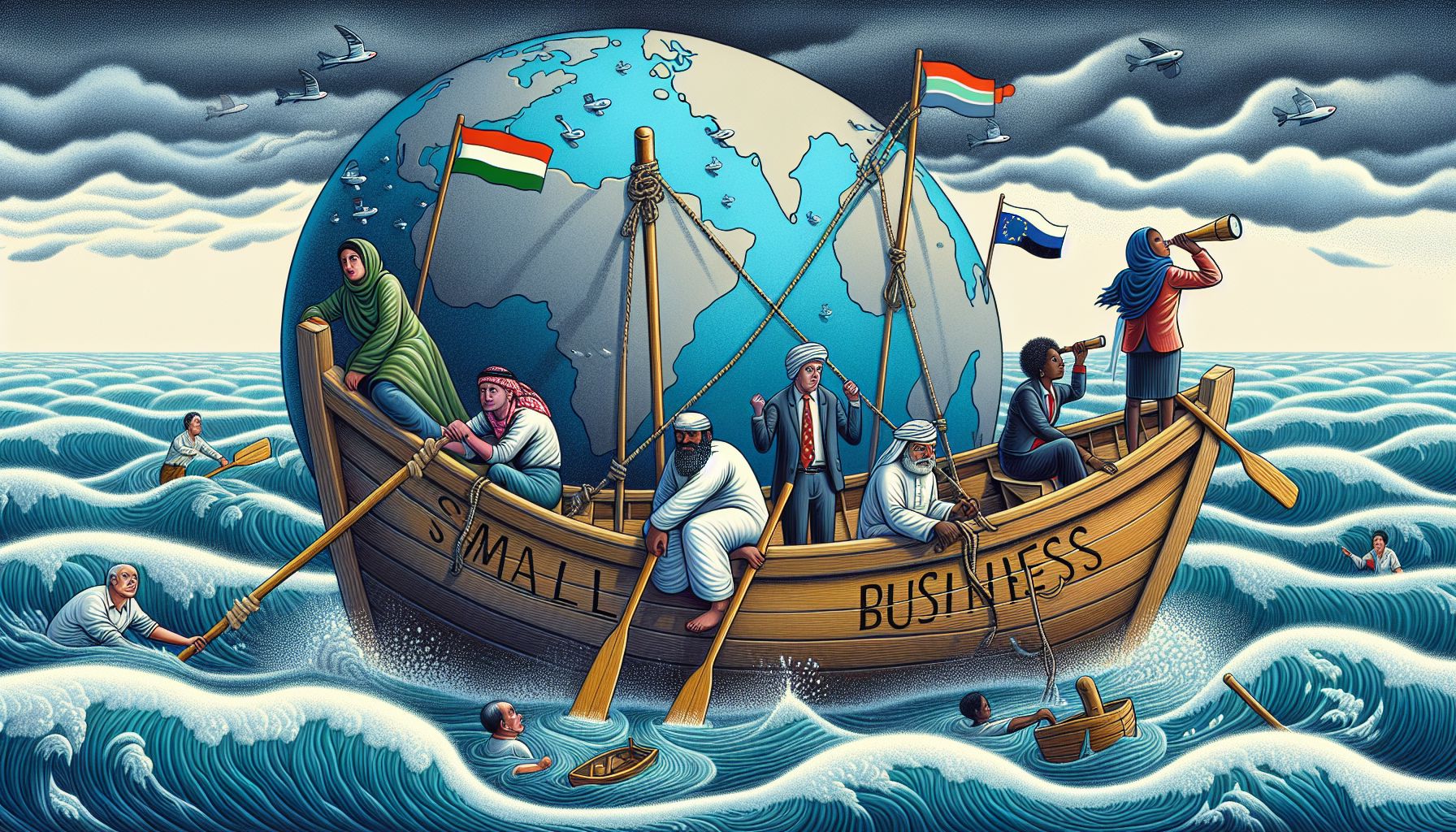
On a sunnyning day in the bustling streets, small business owners unlock their shops and cafes, unaware of the invisible seismic shifts shaping the business landscape across the globe. As we wander through the charming nooks of small communities, it’s easy to overlook the relevance of worldwide economic fluctuations on these local ventures. But the reality is, the influence of global economics on small businesses is profound and impossible to ignore.

Entering the world of small businesses is like stepping onto a global chessboard. The movers and shakers of worldwide economies are the players controlling the game, while small businesses are the pawns trying to navigate their way without being checkmated. Global economic shifts, such as changing trade policies, fluctuation in exchange rates, or varying consumer behavior due to a worldwide recession could shake the small businesses to their very core.
Taking the example of trade policies, consider a hypothetical small business that thrives on imported goods. Perhaps it’s a boutique shop that builds its niche around artisanal items from Southeast Asia, or a cafe bustling with patrons delighted by its unique Swiss chocolates. When governments revise trade policies or increase tariffs, it can lead to a spiral of rising import costs, decreased profits, and a tough choice for the business owner: increase prices and risk customer attrition, or swallow the loss and jeopardize business sustainability.
Fluctuations in foreign exchange rates – another puppeteer of global economic theater – directly impact the purchasing power of businesses dependent on international suppliers. In times of domestic currency devaluation, the cost of imports rises, often leading to reduced profit margins for small businesses.
A worldwide recession acts like a domino, knocking down each piece in its path. Domestic demand plummets as consumers cut discretionary spending, which in turn dampens the revenues of small businesses. For a business that was once bustling with consumers, a global downturn could spell an ominous slowdown.
However, it’s not all doom and gloom. With every challenge comes an opportunity to innovate. Today, small businesses are showing remarkable resilience by turning these challenges into opportunities. They are adopting creative ways to reduce dependency on foreign goods, localizing their supply chain, and moving towards a more sustainable business model. They are exploring digital avenues to tap into new markets, thereby mitigating the effects of decreased local demand.
To wrap it up, the ripple effects of global economic changes on small businesses are undeniable. It underscores the urgent need for business owners to stay informed about international economic trends and embrace adaptability as their core strategy. For in the throbbing heart of change, they will not only find survival but also discover new avenues for growth and innovation.
In the volatile crossroads of global economy and small business survival, the key to staying afloat may very well lie in the age-old wisdom – change is the only constant. Let’s approach the world of small business not as bystanders, but as conscious consumers and empathetic partners, understanding the broader economic undercurrents that shape their existence. Because every small business that thrives is a testament to resilience, creativity, and the undying spirit of entrepreneurship.