
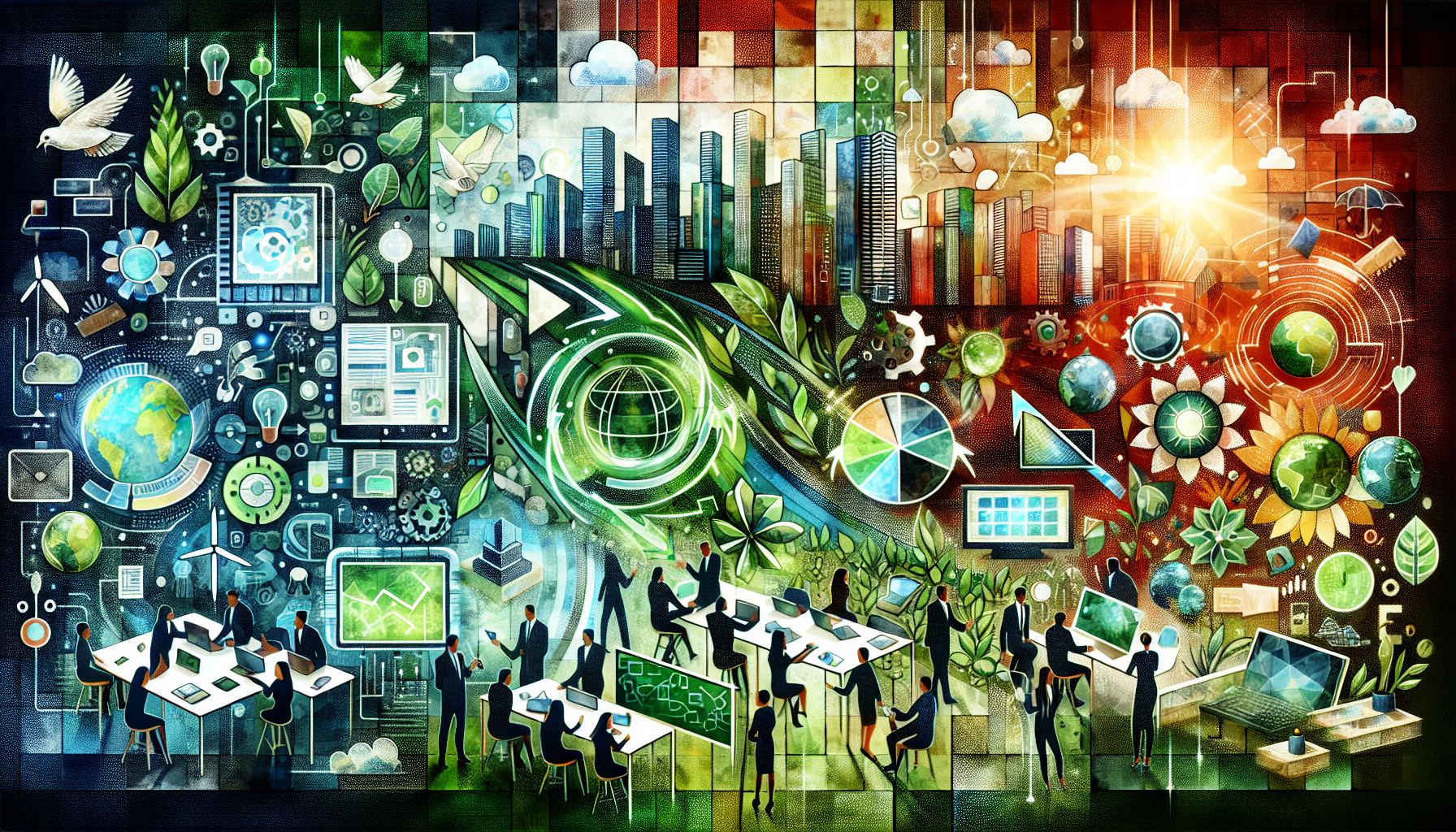
Will the future of business be green? As we face an ever-increasing urgency to mitigate the environmental implications of industrial practices, sustainability is no longer a premium but a necessity. It is in this light that we tackle the realm of sustainable business practices, their relevance, impact, and relationship with the evolving consumer.
Modern commerce has shifted its focus, propelled by a growing awareness of environmental issues and a clamor from society for businesses to take accountability. Pioneering this change are innovations in technology, policy amendments, and resource allocation focused on reducing the environmental footprint, demonstrating that sustainable business is not only possible but profitable as well.
Crucially, these changes are not driven only from the corporate side. A 2020 survey by IBM reveals that almost 6 in 10 consumers are willing to change their shopping habits to reduce environmental harm, and a significant 8 in 10 respondents indicated that sustainability is important to them. It’s evident now more than ever that the modern consumer is invested in the impact of their consumption, making the case for sustainable business practices more compelling.
One standout example of this new business paradigm is Patagonia, the outdoor clothing and gear manufacturer. A forerunner in sustainability, Patagonia demonstrates that it’s possible to maintain a highly profitable business despite, or perhaps because of, a commitment to limiting ecological impact. From using recycled materials in their gear to championing for renewable energy, the company has linked its fortunes to its values, not letting profitability overtake sustainability.
However, transitioning to sustainable business practices is not without its challenges. It includes revolutionizing the current value chain, investing in green technology and substitutes, prioritizing long-term gains over short-term profits, and having an unwavering commitment to transparency and ethical standards. Overcoming these hurdles could pose a significant impediment for scaling such efforts across various industries and regions.
What’s evident is that the financial benefits of going green extend far beyond good PR. Companies committed to sustainability often find that they can charge a premium for their products, attract a loyal customer base and are more resilient to market downturns. As we triple down on our collective environmental duties, it’s clear businesses will need to align with the zeitgeist, and those that adapt to a sustainable framework earlier may reap the most benefits.
As we venture into the future, the call to action for businesses is to re-orient their strategies and processes to explore sustainable alternatives. The necessity to be agile and adapt to new realities is clear, and the future of business will undoubtedly fall under the embrace of sustainability. For the consumer, the power to shape the market lies in their hands through conscious purchasing decisions. Our collective actions will ultimately determine the fate of our economies and the environment.
The march towards sustainable business practices is inevitable and urgent, propelled by the new age consumer, technological advancements, and the critical need to mitigate environmental harm. As businesses and consumers, our choices today will shape the commerce of tomorrow.
In conclusion, the shift towards sustainable business practices is not only a possibility but rather a necessity in the current context. It’s a distinct departure from conventional practices and a bold step towards aligning market demands with environmental conservation. The path is fraught with challenges, but it also promises considerable rewards. A sustainable future for business is not just an environmental obligation—it’s the new norm.