
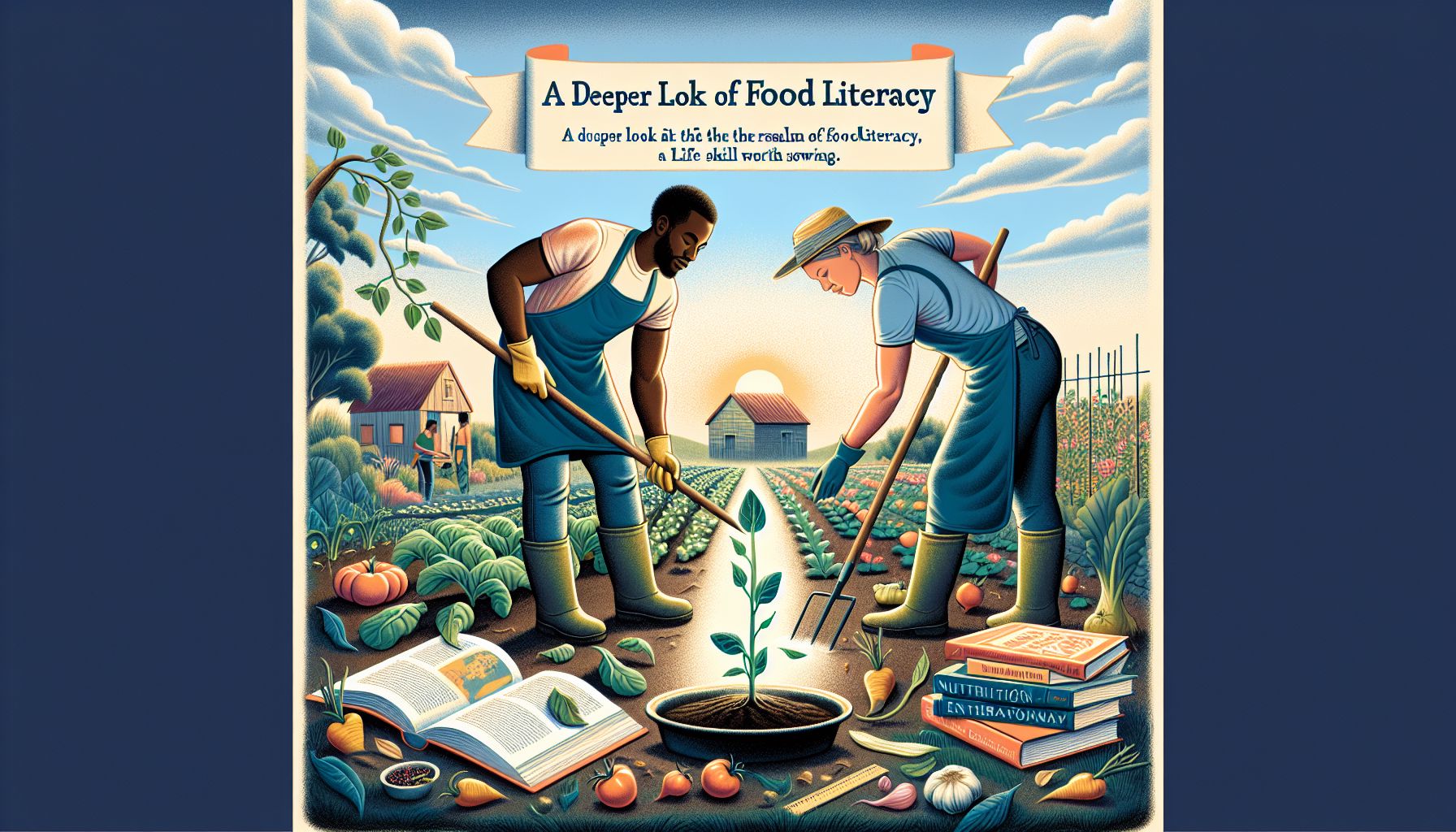
The Twitter hashtag food trends come and go but do we ever ponder, Do we genuinely understand our plate? This thought-provoking question is not just about identifying a broccoli from Brussels sprouts; it dives much deeper into the realm of food literacy.
 Food literacy, in essence, revolves around the idea of having a profound understanding of the food we eat – where it comes from, how it affects our health and wellbeing, and the impact our food choices have on the environment. It’s a holistic compass that navigates us through our food habits, the intricate food systems, and their broader implications.
As we delve into the significance of Food Education in our lives, we realize a gap in our current education system. Food literacy is often underrepresented or completely absent. A sad reality, considering that correct dietary decisions are a lifelong skill, contributing significantly to our health and general wellbeing.
Research shows us that improved food education in schools results in more nutritious choices by the students. A study by B. A. Barton et al. [^1^] showed promising results for the 6th-grade student’s fruit and vegetable intake when provided with food literacy education. This, in turn, creates a foundation for a healthier lifestyle, potentially reducing lifestyle diseases such as obesity and type 2 diabetes, currently on a rampant rise[^2^].
It’s also vital to acknowledge the cultural aspects tied to our food consumption. Food carries within it the flavors of tradition, culture, and heritage, serving as a delicious window into a country’s history. A well-structured food education plan can act as a means to preserve these ethnicities, teaching students about the diverse range of food practices across their own and various other cultures.
The current business landscape can play a significant role in promoting food literacy. By endorsing sustainable sourcing and transparent supply chains, businesses can contribute to informed consumers who understand their food’s journey from farm to table. Food manufacturers can help us identify processed foods, their component ingredients, and how they are produced and processed.
Awareness about societal concerns related to our food systems, including food waste and its environmental implications, can be cultivated via an effective food literacy education approach. This education imparts knowledge on reducing food waste, promoting responsible consumption.
The conclusion is straightforward – an investment in food education equips individuals with a deep-rooted understanding of the impact their food choices have on their health, their community, and the planet. It’s high time that we incorporate food literacy into our education systems and business methodologies, turning the tide on the current health and environmental crisis we are wrestling with.
This call to action aims for greater engagement with food education, making it a cornerstone of our pedagogical and business approaches. Because ultimately, every morsel of food ingested tells a tale, and understanding it is the first step towards sustainable living.
[^1^]: Barton, B. A., Eldridge, A. L., Thompson, D., Affenito, S. G., Striegel-Moore, R. H., Franko, D. L., … & Schreiber, G. B. (2005). The relationship of breakfast and cereal consumption to nutrient intake and body mass index: the National Heart, Lung, and Blood Institute Growth and Health Study. Journal of the American Dietetic Association, 105(9), 1384-1389.
[^2^]: Ng, M., Fleming, T., Robinson, M., Thomson, B., Graetz, N., Margono, C., … & Abraham, J. P. (2014). Global, regional, and national prevalence of overweight and obesity in children and adults during 1980-2013: a systematic analysis for the Global Burden of Disease Study 2013. The lancet, 384(9945), 766-781.