
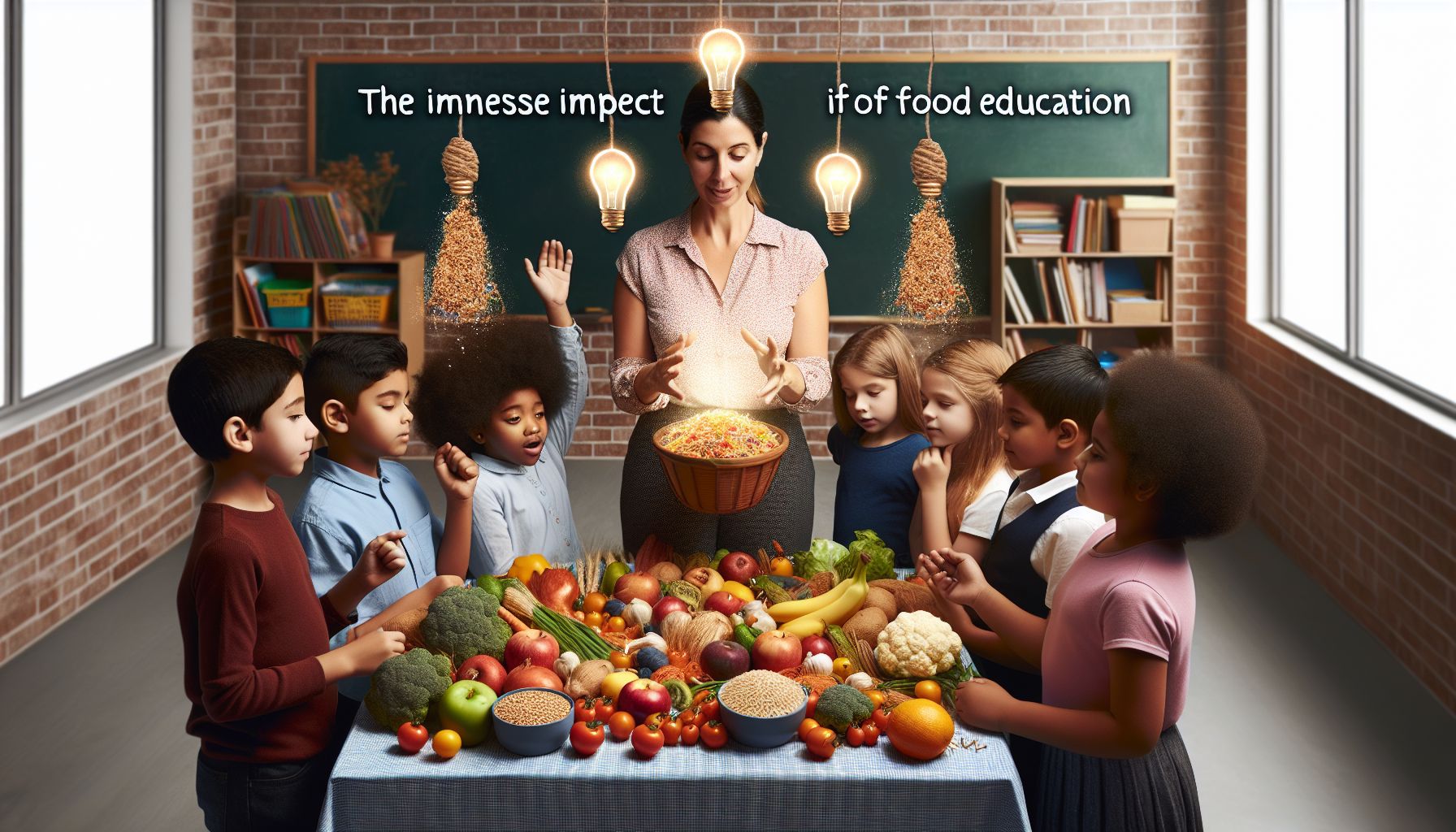
Imagine living in a world where the majority of the population has little understanding of one of their most essential conducts – eating. Shockingly, this is our world today. Most people operate on very limited knowledge about the food they put into their bodies daily. But, what if we could change that? Today, we delve into the importance and potential influence of food education on our health, culture, and lifestyle.

Forget what you thought you knew about food. Even if you’re a culinary maestro, understanding the complex relationship between the food we eat and our overall well-being goes beyond the realm of palatable expertise. Nutrition is a science that concerns us all, and there is an urgent need for its illumination in our educational institutions.
Consider the statistics: the World Health Organization reports that roughly 39% of adults were overweight in 2016, with 13% being obese. These figures are alarming and underscore the urgent need for widespread nutrition education. By teaching individuals – preferably from a young age – to make healthy dietary choices, we equip them for a healthier lifestyle, paving the way to lower obesity cases and diet-related health issues.
But, it is not only about health. Food education also plays a pivotal role in understanding and appreciating cultural diversity. Every culture has its unique style of cooking, ingredients, and dietary customs. Food literacy is a key medium for cultural preservation and understanding. It helps us broaden our gastronomic horizons, encourages us to appreciate different cultures, and can bring communities together, fostering tolerance and acceptance.
Moreover, food education can also encourage sustainability. As we learn more about the ingredients we use and where they come from, we can start making more informed choices concerning environmentally-friendly eating. From choosing locally-sourced produce to reducing food waste, food literacy can significantly impact our planet’s well-being.
Now, contemplate a situation where food education is given its due importance. A society with fewer health issues related to poor dietary choices, acceptance and appreciation of cultural diversity through food, and environmentally-conscious consumers – doesn’t that sound promising?
In conclusion, food education, or rather, the lack of it, is an issue often overlooked. Yet, the impact it can have on our health, culture, and planet is immense. It’s time we recognize food education for the monumental influence it can yield and strive to increase nutrition literacy across the globe.
The issue of food education is of utmost pertinence and is something that needs to be actively addressed. So take that first step today – educate yourself, share knowledge with friends and family, urge your local institutions to implement comprehensive food education, and truly internalize the significance of the phrase, “You are what you eat”.
We didn’t evolve our lofty intelligence to eat junk food, let’s not insult our cognition, let’s eat smart. After all, the route to better health, greater mutual respect, and a healthier planet might just start at the end of our forks.